How I Regained My Balance – A Physical Therapist’s Real Recovery Journey
Balance isn’t something most people think about—until they lose it. I learned this the hard way after a minor fall made me realize how fragile stability can be. As a rehab professional, I dove deep into evidence-based training methods that truly work. This is my story of rebuilding balance strength, step by step, with practical insights backed by science and real-life results. What began as a personal setback became a mission: to understand the mechanics of balance, uncover what goes wrong, and apply proven strategies that restore confidence and control. For anyone who has felt unsteady on their feet, this journey offers hope grounded in real experience and clinical wisdom.
The Moment Everything Tipped
It happened on an ordinary Tuesday morning. I was stepping off a curb, distracted by my phone, when my foot landed awkwardly on a slight incline. In an instant, my body wobbled, arms flailed, and I fell—hard—onto the sidewalk. No broken bones, no emergency visit, but something deeper had shifted. The fall itself was minor, yet the aftermath lingered far longer than the bruising. I began to feel uneasy walking down stairs, hesitant when turning quickly, and increasingly aware of how unsteady I had become. As a physical therapist, I had spent years helping others recover from balance disorders, but now I was facing the same vulnerability I had treated in patients.
The emotional toll was just as significant as the physical one. I noticed a growing fear of falling—a constant undercurrent that altered how I moved through the world. I avoided uneven sidewalks, declined invitations to hike with friends, and found myself holding onto counters more often than before. Simple tasks like reaching for a high shelf or stepping into the shower required extra caution. What disturbed me most was the loss of confidence. I had always prided myself on being strong and independent, but now I questioned my own body’s reliability. This wasn’t just about one misstep; it was a sign that something fundamental had weakened.
Balance, I realized, is not a passive trait but an active skill—one that degrades without use. Like muscle strength or flexibility, it requires maintenance. And for many adults, especially after age 50, subtle declines go unnoticed until a fall occurs. The body’s ability to maintain equilibrium involves constant communication between the brain, inner ear, eyes, and sensory nerves in the joints and muscles. When any part of this system falters, the entire network suffers. My fall was not an isolated incident but a warning signal—a moment of tipping point that forced me to confront a silent decline I had ignored for too long.
Why Balance Matters More Than You Think
Beyond the obvious risk of injury, poor balance undermines independence, mobility, and quality of life. Many people assume balance is simply about not falling, but it’s actually a complex coordination system involving three key inputs: the vestibular system in the inner ear, visual cues from the eyes, and proprioception—the body’s sense of where it is in space. These signals are processed by the brain in real time to make constant micro-adjustments that keep us upright. When one or more of these systems weaken, the brain struggles to integrate the information, leading to instability.
The consequences of imbalance extend well beyond occasional stumbles. According to the Centers for Disease Control and Prevention (CDC), one in four adults aged 65 and older experiences a fall each year, making falls the leading cause of both fatal and non-fatal injuries in this age group. Even near-falls—those moments when you catch yourself just in time—can erode confidence and lead to reduced activity, which in turn accelerates physical decline. Reduced movement leads to weaker muscles, stiffer joints, and diminished cardiovascular health, creating a dangerous cycle of deconditioning.
What’s often overlooked is that balance is not fixed. Unlike vision or hearing, which may decline steadily with age, balance can be improved at any stage of life through targeted training. The nervous system retains the ability to adapt, a concept known as neuroplasticity. This means that even after years of sedentary habits or following an injury, the brain can relearn how to coordinate movement more effectively. The earlier intervention begins, the better the outcomes—but improvement is possible even after a fall has already occurred. Rehabilitation is not just about recovery; it’s about prevention and empowerment.
What Goes Wrong? Common Causes of Balance Decline
Balanced movement relies on a finely tuned network, and many factors can disrupt it. Aging is a primary contributor, as natural changes occur in muscle strength, joint flexibility, and nerve conduction speed. The inner ear’s vestibular system, responsible for detecting motion and head position, can lose sensitivity over time. Vision, too, plays a critical role—conditions like cataracts or glaucoma reduce the brain’s ability to use visual references for orientation. Meanwhile, the feet and legs contain thousands of sensory receptors that provide feedback about the ground surface; when these become less responsive due to neuropathy or poor circulation, the brain receives incomplete information.
Medical conditions also play a significant role. Neurological disorders such as Parkinson’s disease, multiple sclerosis, or stroke can impair motor control and disrupt the brain’s ability to process sensory input. Joint instability—especially in the ankles or knees—can create mechanical imbalances that make standing and walking more challenging. Even temporary issues like inner ear infections or lingering effects from a concussion can trigger balance disturbances that persist long after the initial illness has resolved.
Lifestyle factors are equally important. A sedentary routine leads to weakened core and leg muscles, both of which are essential for stability. Prolonged sitting reduces circulation and diminishes the body’s responsiveness to movement demands. Certain medications, particularly those that affect blood pressure, cause dizziness or drowsiness, and increase fall risk. Fatigue, dehydration, and improper footwear—such as high heels or shoes with smooth soles—can further compromise stability. These elements may seem minor in isolation, but together they create a cumulative risk that many people underestimate until it’s too late.
The Science Behind Balance Rehabilitation
At the heart of effective balance recovery lies neuroplasticity—the brain’s remarkable ability to reorganize neural pathways in response to experience. When balance is impaired, the brain must relearn how to interpret and respond to sensory signals. This doesn’t happen overnight, but with consistent, structured practice, the nervous system adapts. Research shows that targeted exercises can improve postural control, reduce sway, and enhance coordination, even in older adults with chronic balance issues.
Effective rehabilitation follows three core principles: progressive overload, specificity, and sensory integration. Progressive overload means gradually increasing the difficulty of exercises to challenge the system without overwhelming it. Just as lifting heavier weights builds muscle, introducing greater instability strengthens balance. Specificity ensures that training mimics real-life demands—practicing weight shifts prepares the body for turning, while single-leg stands improve confidence during walking. Sensory integration involves training the brain to rely less on one input (like vision) and more on others (like proprioception), which is crucial when environmental conditions change, such as walking in dim light.
Studies have demonstrated that balance training leads to measurable improvements in functional mobility and fall reduction. For example, a meta-analysis published in the Journal of the American Geriatrics Society found that exercise programs incorporating balance and strength training reduced fall rates by up to 24% in community-dwelling older adults. These programs work because they don’t just strengthen muscles—they retrain the brain-body connection. Over time, movements become more automatic, reactions quicker, and confidence grows. The science is clear: balance is not a fixed trait but a trainable skill, and the nervous system responds positively to the right kind of stimulation.
My 4-Phase Rehabilitation Framework
Based on clinical evidence and personal experience, I developed a structured four-phase approach to rebuild balance systematically. Each phase builds on the last, ensuring safety while promoting steady progress. The goal is not just to regain stability but to create a foundation that supports long-term independence and resilience.
Phase 1: Static Stability focuses on mastering control in still positions. This begins with simple exercises like standing with feet together, progressing to tandem stance (one foot directly in front of the other), and eventually single-leg standing. These positions challenge the body’s ability to maintain alignment without movement. I started with 10-second holds and gradually increased duration as my control improved. The key was maintaining proper posture—engaging the core, aligning the ears over the shoulders, and distributing weight evenly across the feet. This phase laid the groundwork for all subsequent progress.
Phase 2: Dynamic Movement introduces controlled motion. Once static balance improved, I added slow, deliberate movements such as weight shifts from side to side, forward and backward lunges, and mini squats. These exercises train the body to adjust its center of gravity smoothly and safely. I used a countertop for light support at first, reducing reliance as my confidence grew. Dynamic exercises also strengthen the muscles involved in balance—particularly the glutes, quadriceps, and calves—while improving joint mobility and coordination.
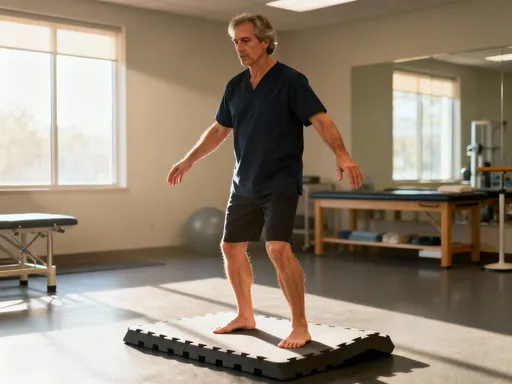
Phase 3: Sensory Challenges reduce dependence on visual input and introduce uneven surfaces. I practiced standing with my eyes closed, which forced my body to rely more on proprioception and the vestibular system. I also used foam pads or folded towels under my feet to simulate unstable terrain. These conditions mimic real-world scenarios like walking on gravel or stepping off a curb unexpectedly. At first, I felt disoriented, but over time, my brain adapted, and my reactions became more precise. This phase was critical in building resilience against unpredictable environments.
Phase 4: Functional Integration brings training into everyday life. I practiced tasks like stepping over obstacles, turning quickly while walking, and navigating cluttered spaces. I incorporated balance challenges into routine activities—such as brushing my teeth on one leg or standing on a cushion while folding laundry. These real-world applications reinforced the skills learned in earlier phases and helped transfer improvements from the clinic to daily living. By the end of this phase, I had regained not only physical stability but also the confidence to move freely and spontaneously.
Daily Habits That Support Balance Recovery
Formal exercises are essential, but long-term success depends on integrating balance awareness into everyday life. Consistency matters more than intensity—short, frequent practice sessions are more effective than occasional long workouts. I made it a habit to do a few balance exercises each morning while waiting for my coffee to brew. Over time, these small efforts added up, reinforcing neural pathways and building muscle memory.
Home safety is another critical component. I removed loose rugs, secured electrical cords, and improved lighting in hallways and stairwells. I installed grab bars in the bathroom and used non-slip mats in the shower. These modifications reduced environmental hazards and created a safer space to practice balance skills without fear. I also paid attention to footwear, choosing supportive, low-heeled shoes with non-slip soles for daily wear.
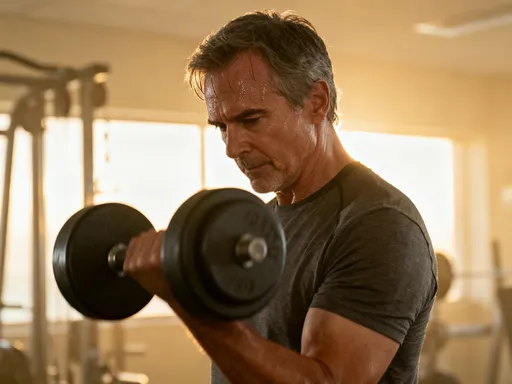
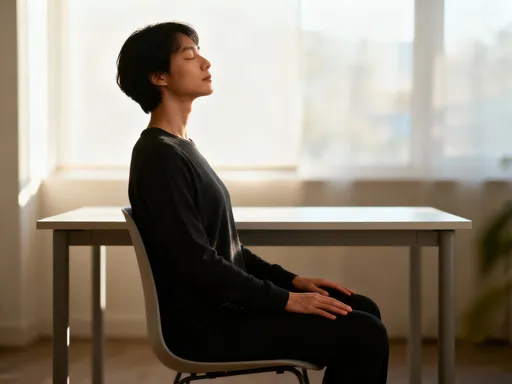
Overall strength and posture play a major role in balance. I incorporated resistance training two to three times per week, focusing on the core, hips, and lower limbs. Strong muscles provide better joint support and improve reaction time. I also became more mindful of my posture throughout the day—sitting tall at my desk, avoiding slouching, and taking breaks to stand and stretch. Mindful movement, such as tai chi or yoga, further enhanced body awareness and coordination. These habits didn’t just support balance—they improved my overall sense of well-being.
When to Seek Professional Help – And Why It Matters
While many balance issues can be improved with self-directed training, some signs indicate the need for professional evaluation. Frequent near-falls, persistent dizziness, unexplained stumbling, or noticeable asymmetry in movement should never be ignored. These symptoms may point to underlying conditions such as vestibular dysfunction, neurological impairment, or musculoskeletal injury that require specialized care.
Working with a physical therapist who specializes in vestibular or neurological rehabilitation offers significant advantages. A trained professional can conduct a comprehensive assessment, identifying specific deficits in strength, coordination, or sensory processing. They can design a personalized program tailored to individual needs, ensuring exercises are safe, effective, and appropriately challenging. Progress is monitored closely, with adjustments made as improvements occur.
Perhaps most importantly, professional guidance prevents harmful compensations. Without proper instruction, people may develop inefficient movement patterns that increase strain or risk of injury. A therapist ensures that technique is correct and progression is gradual. They also provide motivation and accountability, which are crucial for long-term adherence. While self-help strategies are valuable, they are most effective when combined with expert input, especially for those recovering from falls or managing chronic conditions.
Regaining balance isn’t just about preventing falls—it’s about reclaiming confidence, freedom, and control in everyday life. Through structured rehabilitation, patience, and professional guidance, meaningful progress is possible at any age. Stability isn’t a given, but with the right approach, it can always be improved. My journey taught me that even as a healthcare provider, I was not immune to the challenges of aging and injury. But by applying the same evidence-based principles I recommend to others, I regained not only my balance but also a deeper appreciation for the body’s resilience. For anyone feeling unsteady, know this: improvement is possible. With commitment, the right strategies, and support, you can stand stronger—both physically and emotionally.